How to Deliver Multi-Day Indian and South Asian Wedding Photos: One Gallery per Event, or One for Everything? (2026 Guide)
Mehendi, Haldi, Sangeet, Baraat, Nikah, Anand Karaj, Walima, Reception: a South Asian wedding is several events with different hosts and guest lists. How to structure the delivery, when each event deserves its own gallery, how to handle private and religious events, and message templates for both families.
Short answer
Deliver a multi-day South Asian wedding as one folder per event, then decide how to publish it. Use one gallery with a section per event when the same family receives everything and shares it the same way. Use a separate gallery per event when events have different hosts, different guest lists, different privacy needs such as a ladies-only Mehendi or Dholki, or different release dates. Name every link by event and date, put a password on private events, and send each family only the galleries they hosted or attended.
A Western wedding is usually one day and one delivery. A South Asian wedding is a sequence of events: a Mehendi, a Haldi, a Sangeet, a Baraat, the ceremony itself, whether that is a Hindu wedding around the sacred fire, a Nikah or an Anand Karaj, and a Reception or Walima, often spread across several days and sometimes several venues. Each event has its own hosts, its own guests and its own mood. The photographs arrive at the end as one enormous set, and the question every photographer who shoots these weddings eventually faces is how to hand it over: one gallery for everything, or one gallery per event?
There is no single right answer, but there is a right way to decide. This guide explains why multi-day weddings are harder to deliver than single-day ones, maps the common events to what each one needs from a delivery, sets out when a single gallery with sections works and when separate galleries are better, and covers the parts that trip photographers up: private and women-only events, religious venues with their own rules, two families with two guest lists, and releasing events in stages. It ends with a folder structure, a delivery checklist and message templates you can copy.
A note on scope. Traditions differ by region, religion, community and family, and no guide can describe every wedding. The events below are the ones photographers most often cover, described in general terms with sources. When in doubt, ask the couple how their families celebrate, and plan the delivery around that.
Table of Contents
- 1. Why multi-day weddings are harder to deliver
- 2. The events, and what each one needs from delivery
- 3. One gallery with sections, or a gallery per event?
- 4. Five situations where separate galleries win
- 5. A folder structure that survives the whole job
- 6. Private, women-only and religious events
- 7. Releasing events in stages
- 8. Two families, two guest lists, relatives abroad
- 9. Album selection across several events
- 10. Put the delivery plan in the contract
- 11. A delivery checklist
- 12. Message templates you can copy
1. Why multi-day weddings are harder to deliver
Everything that makes wedding delivery demanding is multiplied. There are more frames, because there are more events. There are more people who want the photos, because South Asian weddings are often large: CNBC has reported that lavish Indian weddings often draw up to 1,000 guests, although it also notes that many younger couples are choosing smaller gatherings, and CNN described high-end celebrations with thousands of guests in 2026. And there is more variety in who each photo belongs to.
That last point is the one a single-day workflow misses. At a one-day wedding, the couple is the client and the guests are one audience. At a multi-day wedding, the audience changes from event to event:
- Hosts change. Some events are traditionally hosted by one side of the family. DESIblitz describes the Walima as the grand reception hosted by the groom, for example.
- Guest lists change. A small family ritual at home and a Reception in a hall rarely share a guest list, and many Reception guests attend nothing else.
- Privacy changes. Some gatherings have traditionally been for women only, which changes who should see the photos (see section 6).
- Timing changes. The Mehendi photos can be edited and ready well before the wedding set, and families often want them early.
A delivery that ignores these differences, one giant folder link sent to the couple, still "works". It just leaves the couple doing the sorting, forwarding and privacy decisions for you, on their phone, in the weeks after their wedding. Getting the structure right is a service they notice.
2. The events, and what each one needs from delivery
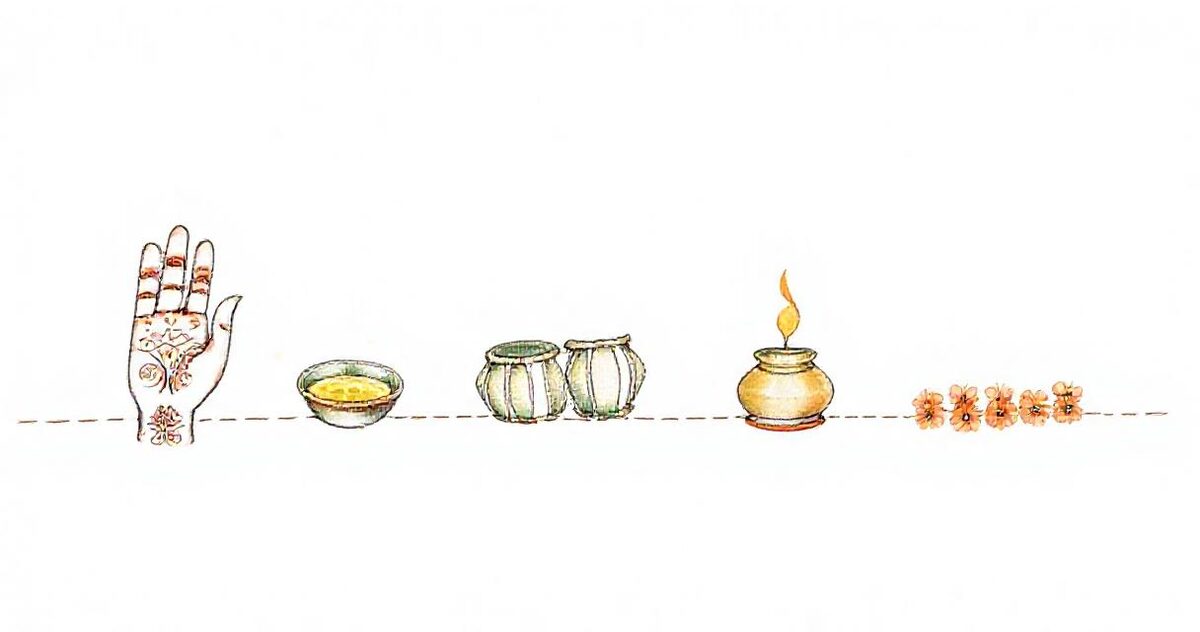
This table covers the events photographers most often shoot. Descriptions are deliberately brief and general; families celebrate differently, and the delivery note is what matters here.
| Event | In brief | Delivery note |
|---|---|---|
| Mehendi | A pre-wedding gathering where henna is applied to the bride | Often the most requested early release; check whether the photos should be shared beyond the women who attended |
| Dholki | A pre-wedding gathering that DESIblitz describes as a ladies-only celebration of family and friends | Treat as private by default; its own gallery with a password is the safe choice |
| Haldi | Turmeric paste is applied to the bride and groom before the wedding | Candid and colourful; ask who should receive it before posting it anywhere wide |
| Sangeet | A pre-wedding party of music and dancing | Performances matter; group dances make natural sections, and video clips are often expected alongside photos |
| Baraat | The groom's procession, with music, dancing and the groom's side of the family | Largely the groom's family's moment; they will want it even if they receive nothing else |
| Ceremony (Hindu wedding, Nikah, or Anand Karaj) | The religious ceremony itself, often at a temple, mosque, gurdwara or with an officiant at the venue | Follow the venue's photography rules; deliver respectfully and in order |
| Reception or Walima | The large celebration; DESIblitz describes the Walima as the grand reception hosted by the groom | The widest audience; the gallery most likely to be forwarded to everyone |
For Pakistani weddings in particular, DESIblitz notes that celebrations can be long: on average they last over a week or even two, with a Dholki in the week before the Mehndi and a Mayun at the bride's home among close family. The longer the celebration, the more a clear structure helps.
3. One gallery with sections, or a gallery per event?
Both approaches start from the same folder of events. The difference is how many links you send and who receives which.
| One gallery, a section per event | A separate gallery per event | |
|---|---|---|
| Links to send | One | One per event |
| Best when | One family receives everything and shares it with the same people | Events have different hosts, guests, privacy or release dates |
| Privacy | One password covers everything | Each event can have its own password, or none |
| Forwarding | Forwarding the link shares every event | Families forward only what they hosted |
| Early releases | Add sections as events are ready | Send each gallery when it is ready |
| Client effort | Lowest: one place to look | Slightly more: several links, which need clear names |
A useful rule: if you would send the same link to the same people, use one gallery; if you would hesitate before forwarding one event to everyone who attended another, give it its own gallery. Many photographers end up with a mix: a private gallery for the Mehendi or Dholki, and one gallery with sections for everything from the Baraat onwards.
4. Five situations where separate galleries win
- A private or women-only event. If an event was traditionally for women only, its photos may not be meant for everyone who came to the Reception. A separate gallery, shared with the bride or the hosts, lets the family decide who sees it.
- Different hosts. When the groom's family hosted the Walima or Baraat, they are a client too. Sending them their own gallery avoids routing everything through the bride's side, and the reverse.
- Different release dates. Delivering the Mehendi a week after the event and the full wedding a month later is easier to communicate as two galleries than as one gallery that keeps changing.
- Religious ceremonies. Some families prefer the ceremony photos shared more carefully than the party photos. A separate gallery with a password respects that without restricting the celebration photos.
- Very large sets. When each event is hundreds of frames, one gallery per event keeps each link fast to browse and easy to find later, especially for older relatives.
If none of these apply, one gallery with a section per event is the kinder choice: fewer links, one password, and a jump-to-event menu at the top.
5. A folder structure that survives the whole job
Whatever you publish, organise the files the same way from import to archive. Numbering the events keeps them in the order they happened, which is how families remember them.
Weddings/
  2026-11 Aarav and Meera/
    01 Mehendi/
    02 Haldi/
    03 Sangeet/
    04 Baraat/
    05 Wedding Ceremony/
    06 Reception/
    Selects for album/
    Raw/
This structure maps directly onto either delivery. If your finished JPEGs live in Google Drive, a gallery that reads the folder can turn each event subfolder into a section automatically: on GalleryLink, subfolders become named sections, and if you reorganise in Drive the gallery follows. For separate galleries, point each gallery at its event folder instead. Our guide to Google Drive for photographers and how much storage wedding photography needs cover the storage side, which matters more for a five-event wedding than a one-day one.
If you work with a second shooter across several events, agree on the event folder names before the wedding so both sets land in the right place; our second shooter workflow covers the handoff.
6. Private, women-only and religious events
Women-only gatherings
The Knot notes that the Sangeet was historically a female-only event organised by the women of both families, and DESIblitz describes the Dholki as a ladies-only celebration. Many modern celebrations are mixed, but you should never assume. Before the wedding, ask the couple two questions for each event: who will be there, and who should receive the photos. Write the answers into your delivery plan.
For any event the family treats as private, the practical defaults are a gallery of its own, a password, a title that does not include full names, and a link sent directly to the bride or the host rather than posted in a wide group chat. Our guide to password-protecting client galleries explains how to share the password well.
Religious venues
Temples, mosques and gurdwaras often have their own rules, and they apply to delivery as much as to the shoot: a photo you should not have taken is not one you should deliver. As one example, a UK gurdwara publishes wedding rules for photographers that include not turning your back to the Guru Granth Sahib when taking photos, a ban on jibs and cranes, standing still during the Ardaas and Hukamnama, and no couple shoots in the main halls after the ceremony. Ask every venue for its rules in advance, and cull the ceremony set with them in mind.
7. Releasing events in stages
Families rarely want to wait for the whole wedding to be edited before seeing the Mehendi. Staged delivery keeps them happy and spreads your editing load, as long as expectations are clear.
- Sneak peeks within days. A small set from each event, shared soon after, answers the "are they ready yet?" messages. Our piece on how long wedding photos take covers realistic timelines.
- Early events first. Release the Mehendi, Haldi and Sangeet as they are finished, each as a gallery or as a new section.
- The ceremony and Reception last. These are the largest and most important sets, and they deserve the most careful cull.
- Say what is coming. Every delivery message should list which events are included and which are still in progress, so nobody thinks photos are missing.
If you add events to one gallery over time, a gallery that reads a folder updates itself when you add the next event folder; the couple keeps the same link throughout.
8. Two families, two guest lists, relatives abroad
South Asian weddings frequently span continents. Relatives who could not travel want the photos as much as those who did, and they are usually reached through family group chats. WhatsApp groups can hold up to 1,024 members, so the size of the family is rarely the problem. Forwarding hundreds of individual photos is.
Post one link per event instead. A link opens on any phone without an app or account, and when it is a Drive folder shared as Anyone with the link, people can open it without signing in. A gallery link does the same with a better viewing experience, full-size previews and a download button on each photo.
For the two families, agree who is responsible for sharing what. A common arrangement is that each family receives the galleries for the events it hosted, and both receive the ceremony and Reception. Sending the right links to the right people once is much easier than asking the couple to sort it out later. Our guide to sharing wedding photos with guests covers the guest side in more depth, and collecting guest photos with a QR code works especially well at a large Reception.
9. Album selection across several events
Albums for multi-day weddings are often larger, and the selection conversation can stall when favourites are scattered across five events. Two approaches keep it moving:
- Select per event. Give the couple a target number of favourites for each event, so the Sangeet does not crowd out the ceremony. Separate galleries make this natural.
- Select once, from one gallery. If you delivered one gallery with sections, ask for one combined selection with a suggested split by event.
Either way, get the picks back as filenames rather than screenshots. A gallery with favourites or album selection does this for you; our client proofing and selection workflow covers the process step by step.
10. Put the delivery plan in the contract
Most delivery disappointments at multi-day weddings are expectation problems, not photography problems. A few lines in the contract or booking confirmation prevent most of them:
- Which events you are covering, and which you are not.
- Whether each event is delivered as its own gallery or as a section of one gallery.
- Who receives each gallery: the couple, the bride's family, the groom's family.
- Which events are private or password protected.
- When each event will be delivered, and when sneak peeks arrive.
- How long the galleries stay online, and how the album selection works.
This is also where the tools you use affect your quote. Some gallery platforms, including GalleryLink's free plan, include a single gallery; delivering one gallery per event needs a plan with multiple galleries. On GalleryLink, one free gallery with a section per event covers the single-gallery approach, and Pro adds unlimited galleries, passwords, favourites and album selection for the per-event approach. Price the delivery you are promising.
11. A delivery checklist
- Before the wedding, list the events and ask, for each one, who attends and who should receive the photos.
- Ask every religious venue for its photography rules.
- Create the wedding folder with a numbered subfolder per event, and share the naming with any second shooter.
- After each event, back up the files the same day.
- Send a small sneak peek from each event within a few days.
- Cull each event with its audience and venue rules in mind.
- Decide per event: section of one gallery, or its own gallery. Add passwords to private events.
- Title every gallery by event and month, without full names for private ones.
- Open every link in a private browser window on a phone before sending.
- Send each family only the links agreed, with a message listing what is included and what is still coming.
- Collect the album selection by event, as filenames.
- Archive the whole wedding folder, including the selects, with a second copy.
12. Message templates you can copy
Early release, to the couple
The Mehendi photos are ready: [link]. The password is [password]. This is just the Mehendi; the Haldi and Sangeet will follow by [date], and the wedding and Reception by [date]. As this was a close family gathering, I have kept it private, so please share it with whoever you would like to see it.
To the groom's family, for the events they hosted
Namaste / Assalamu alaikum [name], congratulations again. Here are the photos from the Baraat: [link]. Every photo can be opened full size and downloaded. The ceremony and Reception gallery will come to both families together on [date].
The full delivery
Your wedding gallery is complete. Here is everything, organised by event:
Mehendi: [link]
Haldi: [link]
Sangeet: [link]
Wedding and Reception: [link]
Please pick up to [number] favourites across the events for the album by [date]. The links will stay online, so you can come back to them any time.
For the family group chat
The Reception photos are here for everyone: [link]. Tap any photo to see it full size and use the download button to save your favourites. No app or sign-in needed.
A multi-day wedding is one of the biggest jobs a photographer takes on, and the delivery is the last thing both families experience of your work. Organise by event, send each family what belongs to them, protect what is private, and name everything clearly. If most of your weddings are single-day, the general wedding delivery guide is the place to start; if you shoot multi-day weddings regularly, the wedding photographers page shows how sections, passwords and album selection fit together.