Youth Sports Photography Business Guide (2026): Leagues, Picture Day, Pricing and Parent Delivery
How to build a youth and high school sports photography business in the US and Canada: what parents and leagues want, picture day, game and tournament coverage, pricing for parents and season passes, recruiting photos, a season calendar, privacy for photographing kids, and delivering private galleries to every family.
Short answer
A youth sports photography business usually combines picture day (team and individual portraits), game and tournament coverage sold to parents, and commissioned work for schools and clubs. Win leagues with a simple proposal, insurance and a low-effort process; run picture day from rosters with one consistent setup; price with clear packages or season passes; and deliver one private gallery per team or game, fast and easy on a phone, so families buy and share.
Youth and high school sports are one of the steadiest kinds of photography work in the US and Canada. Every season brings new teams, every team brings a dozen or more families, and nearly every parent wants good photos of their kid playing. A photographer who becomes "the league's photographer" can fill weekends for years.
But sports photography is a business of volume and logistics as much as images. Picture day means 200 kids in four hours. A tournament weekend means thousands of frames. And the real customers, the parents, want their child's photos quickly, on their phone, without digging through everyone else's. This guide covers how to build that business: winning leagues and schools, running picture day, pricing for parents, covering games, and delivering so families actually buy and share. For the delivery details themselves, we've also written about sharing team photos with parents and same-day sports galleries.
- The market: what families and leagues want
- Three ways to make money
- Winning leagues, clubs and schools
- Running picture day
- Covering games and tournaments
- Pricing for parents
- Delivering to every family
- Photos for recruiting profiles
- A sample season calendar
- Kids, privacy and permissions
- Gear and workflow for volume
- Growing season over season
The market: what families and leagues want
There are three groups to keep happy, and they want different things:
- Parents want great photos of their child, easily found, delivered quickly, at a fair price. They'll share the best ones immediately, especially after a big game.
- Leagues, clubs and schools want a reliable photographer who turns up, handles picture day without chaos, keeps kids' photos private, and causes no complaints. Some also want team photos for their website or banners.
- Athletes, especially high schoolers, want action shots that look like the pros' and that they can post. Older athletes may also need photos for recruiting profiles.
The common thread is speed and ease. A parent who has to scroll through 900 photos to find their child, or wait three weeks, buys less and recommends you less.
Three ways to make money
Most sports photographers combine some of these:
- Picture day (team and individual portraits). The classic model: one organized session per team, with packages parents order. Predictable, high volume, mostly done before the season gets busy.
- Game and event coverage. Action photos from games, meets and tournaments, sold to parents individually, as packages, or as a flat "season pass". Often the most fun, and the photos parents love most.
- Commissioned work. A school, club or booster group pays a flat fee for coverage of specific events (senior night, homecoming, championships) or for media they'll use themselves.
Picture day pays the bills; game coverage builds the relationship and the reputation; commissioned work fills gaps. A season with all three is the most stable.
Winning leagues, clubs and schools
Leagues choose photographers on trust more than price. They're handing you access to children and a direct line to every family, so show them you'll make their life easier:
- Start local and specific. Your own kids' leagues, your old school, a club where you know a coach. One good season is your best reference.
- Bring a simple proposal: what you'll provide (picture day, team photo, game coverage), how parents order, how photos are delivered privately, your timeline, and what the league gets.
- Offer something to the league. Common options include free team photos for the club's website, a banner for the sponsor wall, or a contribution back to the league from sales. Whatever you offer, put it in writing.
- Be ready for their requirements. Many youth organizations ask for liability insurance, and some require a background check for adults working with kids. Have these ready before they ask.
- Make it low-effort for them: you handle the schedule, the order process and the delivery. The league just shares a link with families.
Running picture day
Picture day is a production line, and it goes well when it's planned like one:
- Get rosters in advance: team, player names, numbers, coaches. Rosters let you label photos correctly and make delivery to each family possible.
- Schedule teams in slots, youngest first (they lose patience fastest), with buffers for late teams.
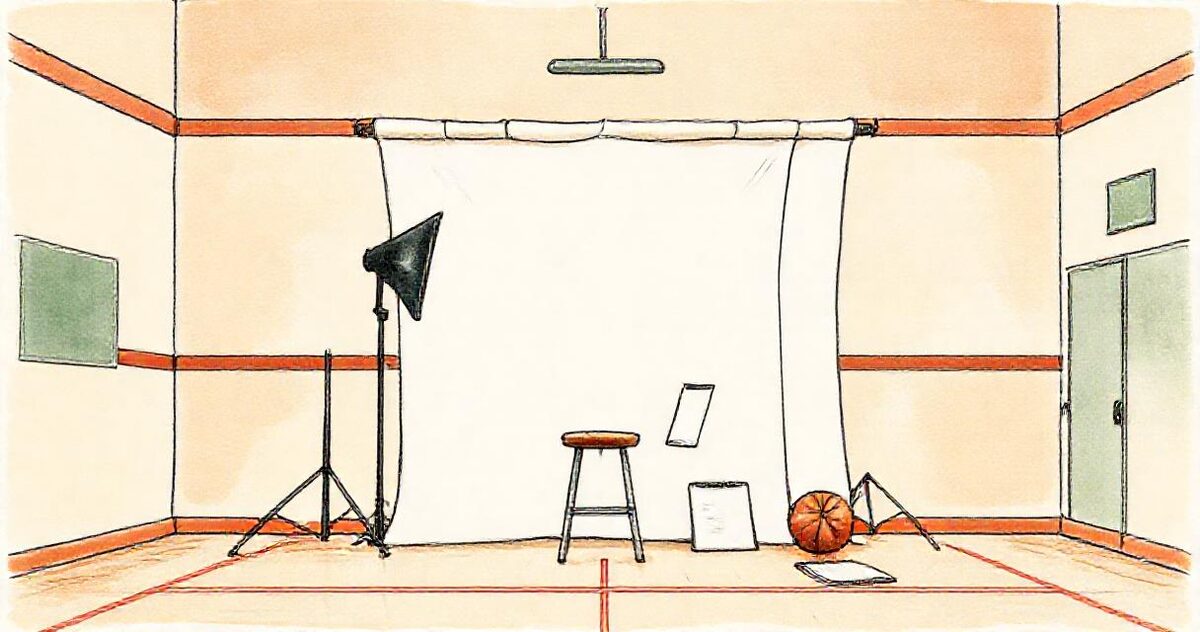
- One set, one light setup, consistent across every athlete, so editing is quick and the team's photos match.
- A capture system for names: photograph each athlete's name card or number first, or use a barcode or tablet system, so you never guess who's who later.
- Team photo first, then individuals, while the team is still together and tidy.
- A helper to line kids up, check names and keep the schedule moving.
- Composites and "memory mates" (an individual photo combined with the team photo) are popular products; plan the layout before the day.
Covering games and tournaments
Action photography is where parents fall in love with your work. To make it a business rather than a hobby:
- Know what you're covering: agree in advance which games, and whether you're covering the whole team or selling to whichever families buy.
- Try to get every player: parents notice if their child isn't in the gallery. Keep a roster handy and look for the players you haven't caught yet.
- Cull hard: parents want the best of their child, not every frame. A tight edit sells better than an overwhelming one.
- Deliver fast: a gallery the same night or the next morning, while the game is still being talked about, sells far more than one a week later. Even a small highlights set first, with the full gallery to follow, keeps momentum.
- Organize by game and by player where you can, so a parent finds their child in seconds.
Pricing for parents
Sports pricing varies widely by region, sport and age group, so the right numbers depend on your market. The structures that tend to work:
- Picture day packages: a few clear tiers (for example, a basic package with one print and a digital file, a mid package with more prints, and a premium one with a memory mate and all digitals). Keep it to three or four options; long order forms slow everyone down.
- Game photos: per-image digital downloads, a per-game bundle for one athlete, or a season pass (all of one athlete's photos for the season at a flat price). Season passes are easy to sell up front and reward you for covering more games.
- Team-wide pricing: some leagues or booster groups prefer to pay one flat fee so every family gets their child's photos. Less selling, guaranteed income, very popular with parents.
To check a price, work out your time per team or per game (shooting, travel, culling, editing, delivery, answering questions), the number of families likely to buy, and what you need to earn per hour. For example, if covering one game takes about six hours in total and roughly eight of fifteen families buy a $25 game bundle, that's $200, or about $33 an hour before costs. That tells you whether to raise the price, sell a season pass instead, or ask the booster club for a flat fee. Your own numbers will differ; the point is to know them.
Delivering to every family
Delivery is where most sports photographers lose time and sales. One big public album of every child is easy to make but frustrating for parents and uncomfortable for privacy. What works better:
- One gallery per team or per game, private to that team's families, with sections per player or per period where it helps.
- Fast, ideally the same night or the next day for games.
- Easy on a phone, because that's where parents open it, usually right after the game.
- Favorites, so families can mark the shots they want printed or bought.
- Downloads that match what they paid for, and a password if the league wants galleries private.
For the full delivery playbook, see delivering photos to every family on a team or in a class.
How this works in GalleryLink
Many sports photographers already export to Google Drive by team and game. GalleryLink turns each of those folders into a gallery parents enjoy using: paste the folder link, and subfolders (one per player, or per quarter or game) become sections. Export more photos into the folder after the game, and they appear in the gallery within about a minute, so a quick highlights set can grow into the full gallery at the same link.
- Same link all season: one gallery per team, updated as you add games.
- Passwords for teams that want privacy; favorites so parents pick their shots.
- Stats showing views and downloads, so you can tell the league how well the galleries were used.
- Duplicate a gallery to set up every team in a league with the same look in seconds.
- A QR card for the sideline or the team's bag tags, so parents can find the gallery.
Pro is $5 a month or $50 a year with unlimited galleries, so a league with twenty teams costs the same as one. Drive-linked galleries use your own Google storage, so thousands of game photos don't push you into a bigger plan.
Photos for recruiting profiles
For high school athletes hoping to play in college, photos are part of their recruiting profile, alongside video and stats. It's a natural, higher-value service for older teams:
- A clean headshot in uniform, the same kind of image used on college rosters.
- A few strong action images that show position and skill: a pitcher's release, a striker's shot, a lineman's stance.
- Consistency: files sized and named so families can upload them to recruiting sites and social profiles without fuss.
- Timing: athletes often update profiles before the junior season and ahead of camps and showcases, so offer recruiting sessions then.
Keep these as a separate, clearly priced package, delivered in their own private gallery. Families appreciate a set they can share with coaches without the rest of the season's photos attached.
A sample season calendar
Seasons differ by sport and region, but a typical school-year rhythm looks like this:
| When | What to do |
|---|---|
| Before the season | Confirm leagues and teams, get photo policies and rosters, schedule picture day, set packages and order process. |
| First weeks | Picture day for every team; deliver team and individual galleries within your promised time. |
| Regular season | Game coverage on an agreed schedule; galleries the same night or next day; season-pass updates. |
| Senior night and playoffs | High-value events: commissioned coverage, banners, fast galleries. |
| End of season | Final gallery reminders, banquet slideshows, reviews from parents and coaches, a short report to the league. |
| Between seasons | Recruiting sessions, renewal conversations, and planning the next sport. |
Writing the calendar down before the season starts is half the work: it tells the league what to expect and tells families when photos are coming.
Kids, privacy and permissions
You're photographing children, often in public places, and families trust you with those images. A few habits protect them and protect you:
- Follow the league's or school's photo policy, and ask for it in writing at the start. Some organizations have families who must not be photographed or published; get that list and respect it.
- Keep galleries private by default: unlisted links, passwords when requested, and no public albums of kids without permission.
- Ask before using photos in your marketing, and get a parent's permission for any public use of a child's image. A model release for your portfolio is a separate permission from delivering photos to the family.
- Don't caption full names publicly alongside photos of minors.
- Secure your files: backups, strong passwords, and no client galleries left on a lost phone.
Gear and workflow for volume
- Fast autofocus and a fast telephoto make outdoor sports possible; indoor gyms need a wide aperture or flash where permitted.
- Two memory cards recording at once, where your camera allows, because there's no reshooting a championship.
- Presets per venue: gyms and fields have consistent light; one edit synced across a game saves hours.
- A naming system: season, sport, team, game date. Export straight into a matching folder structure.
- A delivery checklist per game: cull, edit, export to the team folder, post the gallery link to the team's parents, note it in your tracking sheet.
Growing season over season
- Collect reviews from parents and coaches after each season; leagues talk to each other.
- Report back to the league: how many galleries, views and downloads. Numbers make renewal easy.
- Offer senior night and banners to high school teams; these are high-value, easy to repeat each year.
- Add sports one at a time, using the same systems.
- Keep your team galleries online for the season, and tell families how long after that, so they download what they want.
Sports photography rewards the photographer who is organized as much as the one with the best lens. Get the logistics right (rosters, picture day, fast private galleries) and the work comes back every season.